
Discover how Arius collaborated with Tate Britain to facilitate a digital restoration prototype, revealing the hidden history of a British masterpiece.
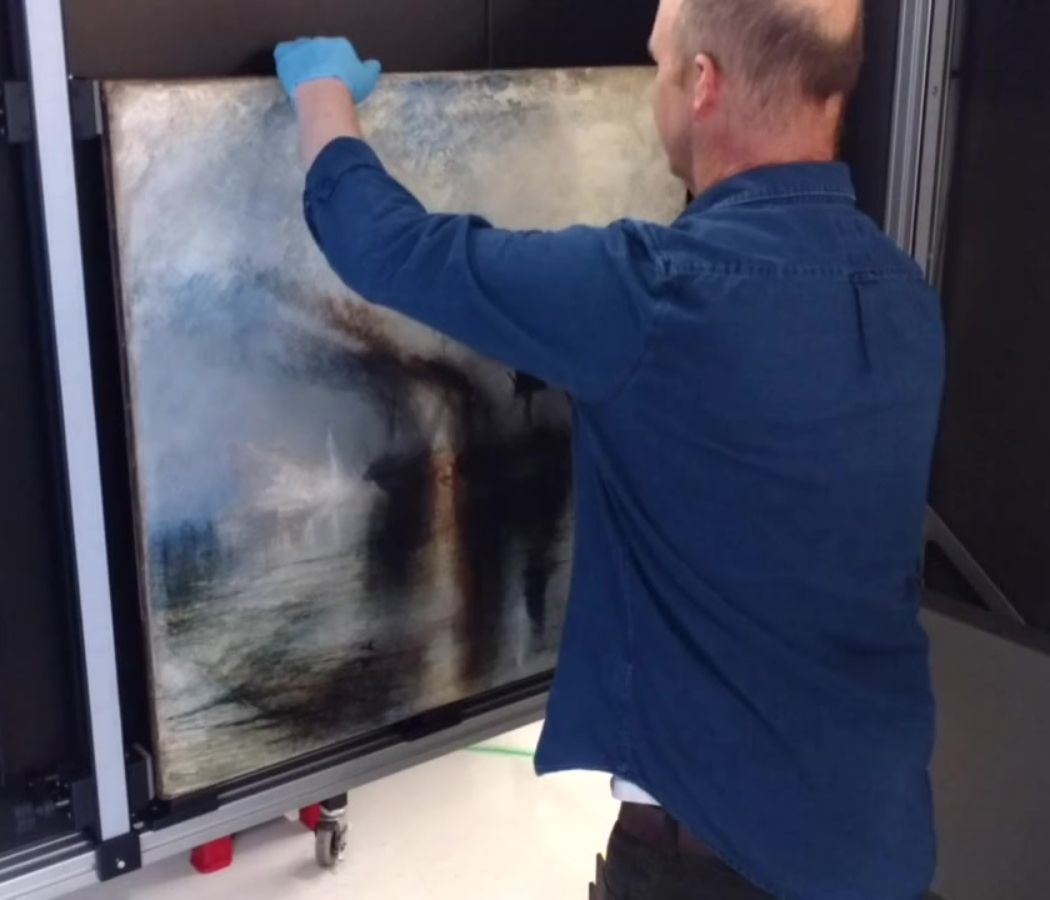
Tate Britain is home to the world’s most significant collection of works by J.M.W. Turner. In a landmark collaboration, Arius digitized 11 works from the Tate collection, but none proved as enigmatic as Turner’s Peace – Burial at Sea.
While the painting is famously displayed in a gold octagonal frame, our ultra-high-resolution ADMF™ data uncovered a hidden story beneath the ornate corners. The exposed edges revealed Turner’s intentional experimentation with frame shapes, revealing underlayers of sketches and varying paint thicknesses that had been obscured for over a century.
To explore "what might have been," Arius produced two distinct physical outcomes for study:
The Unaltered Replication: A high-fidelity, textured print of the painting "as is," including the aged varnish and the original octagonal composition.
The Digitally Restored Prototype: A "fixed" square format where our team digitally removed decades of soot and surface grime, extending the composition into the corners to reveal Turner’s hidden sketches.
By displaying these two versions side-by-side, we provided the Tate with a unique forensic tool, allowing historians and the public to compare the raw reality of the masterpiece against a restored vision of Turner’s potential intent.


Tate Britain is the home of British art from 1500 to the present day. It houses the world’s largest collection of works by J.M.W. Turner, housed in the dedicated Clore Gallery, and is a global leader in the study and preservation of British heritage.

The collaboration between Arius and Tate Britain also resulted in a curated collection of officially licensed textured reproductions. These editions capture the exact relief and spirit of Turner’s brushwork, allowing collectors to own a piece of British art history.
Discover the Certified Tate Museum Special Edition of Turner’s digitally restored, textured print. Enjoy this high-fidelity reproduction anywhere in the world, while Tate receives funding through royalties.
Discover how our non-invasive scanning technology provides invaluable data for conservation and historical research.

