
The history of Arius' world-leading technology begins with a ground-breaking project to solve the mysteries of the world's most famous smile.
The Arius journey began with an extraordinary challenge: to create the first 3D digital copy of Leonardo da Vinci’s Mona Lisa. To showcase the capabilities of laser technology, a team of researchers at the National Research Council of Canada (NRC) custom-built a system specifically for this masterpiece.
Using a safe, low-power white laser beam, the team completed a comprehensive 16-hour scan over two sessions. This project was more than just a digital photograph; it was a full 360-degree topographical capture of the poplar panel that has supported the painting for over five centuries. The resulting data formed a virtual model composed of 333 million polygons, enabling historians to study the work from every conceivable angle for the first time.
The scanning of the Mona Lisa uncovered new information that had been hidden for generations! Researchers traced contour lines on the panel's surface to precisely reproduce its relief, revealing warping with a precision of a hundredth of a millimetre. Advanced mathematical processing of the 3D data highlighted da Vinci’s use of sfumato, revealing the delicate, translucent layers of paint used to darken the eyes.

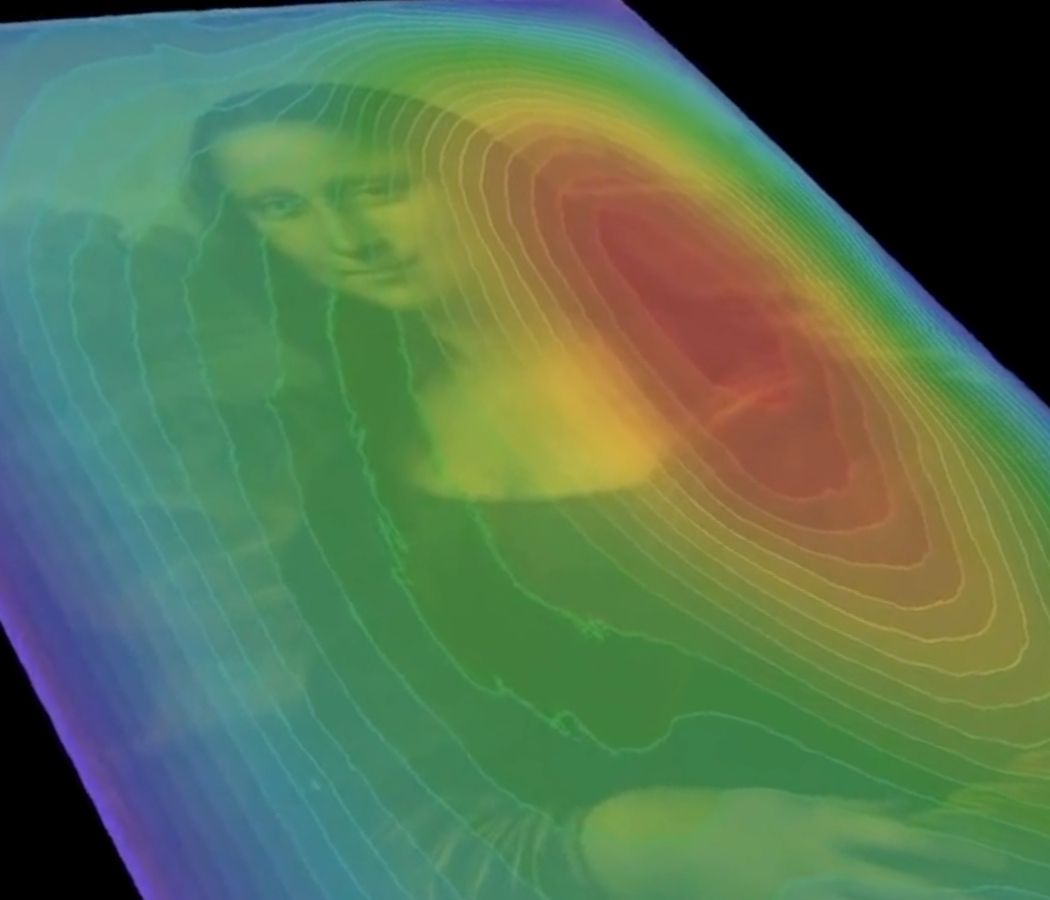

This ground-breaking project proved what was possible with laser scanning, serving as the catalyst for Arius to refine and elevate this technology into the world-leading scanning and printing solutions we provide today.
The NRC is Canada's largest federal research and development organization. Their pioneering work in optical scanning technology provided the foundational science that Arius has since commercialized and refined for the international art market.

Discover how our heritage-proven technology can provide an immutable record for your most precious assets.

